Multichannel, Omnichannel and Unified Commerce: What's the Difference?

Ask a shop owner how many places she sells from, and she'll rattle them off without thinking twice. The shop, the webshop, the handheld terminal for the summer markets, and the QR code on the sign by the door.
Four. She has that completely under control.
Now ask how much revenue each of those four brought in last month.
There's a short silence. Not because the numbers don't exist, because they all do. They just live in four different places, in four different formats, and there hasn't been a free morning yet to add them all up.
That's what it looks like in a lot of businesses. Very few decide from day one that they need lots of different sales channels. You simply end up with them. One at a time, whenever customers need another way to buy, and rarely does anyone stop to ask how the new channel should work together with the ones already in place.
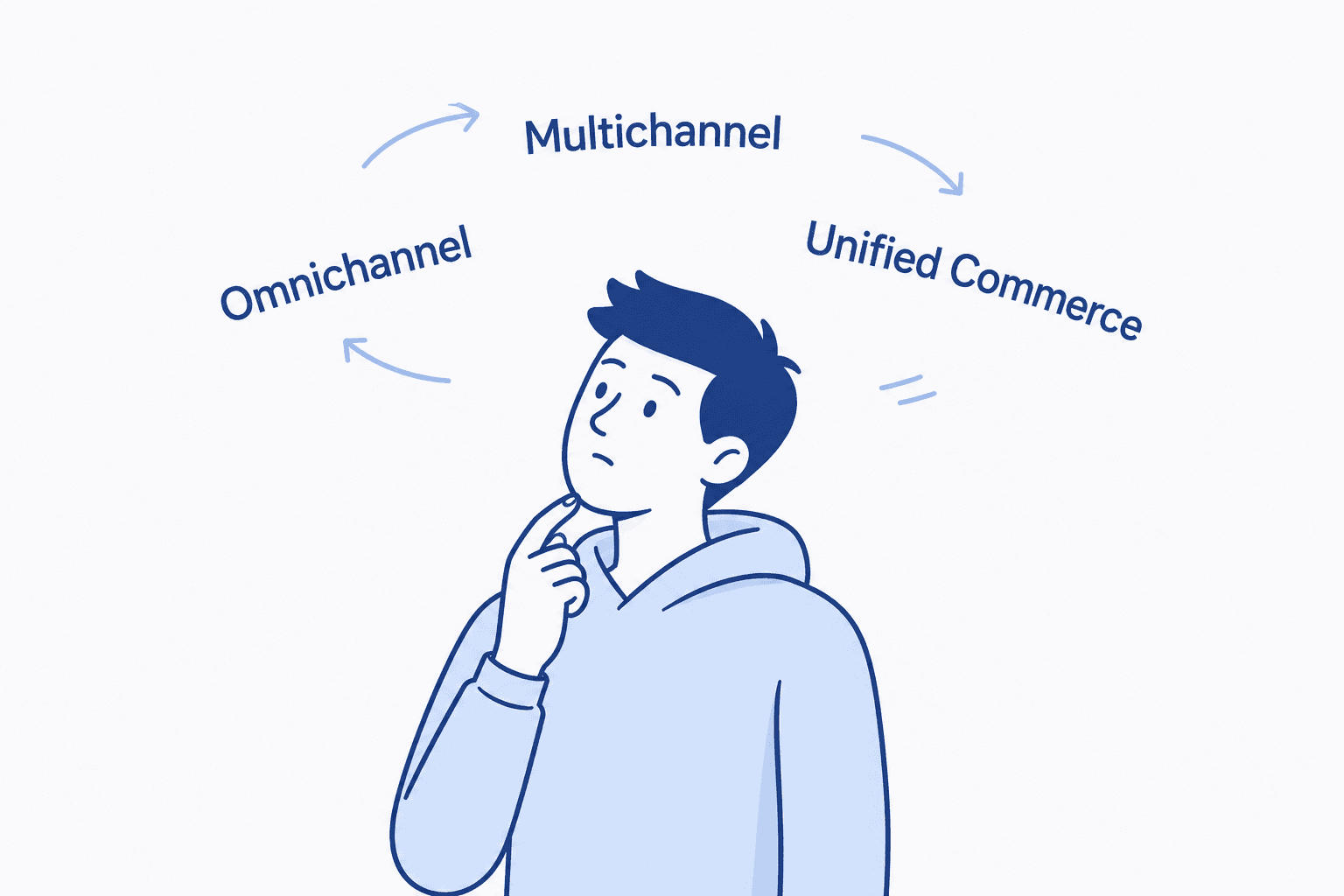
Then, suddenly, the terms start appearing. Multichannel. Omnichannel. Unified commerce. They're often used interchangeably, frequently by people who'd quite like to sell you something, and they can easily sound like three names for the same thing.
There's no official checklist that says exactly when a setup moves from one to the next, either. The terms are used slightly differently depending on who you ask, and in practice they can overlap.
But they describe fundamentally different levels of connection between your sales channels. A simple way to tell them apart is to look at what's connected, and for whom.
Step 1: Multichannel, where most businesses are
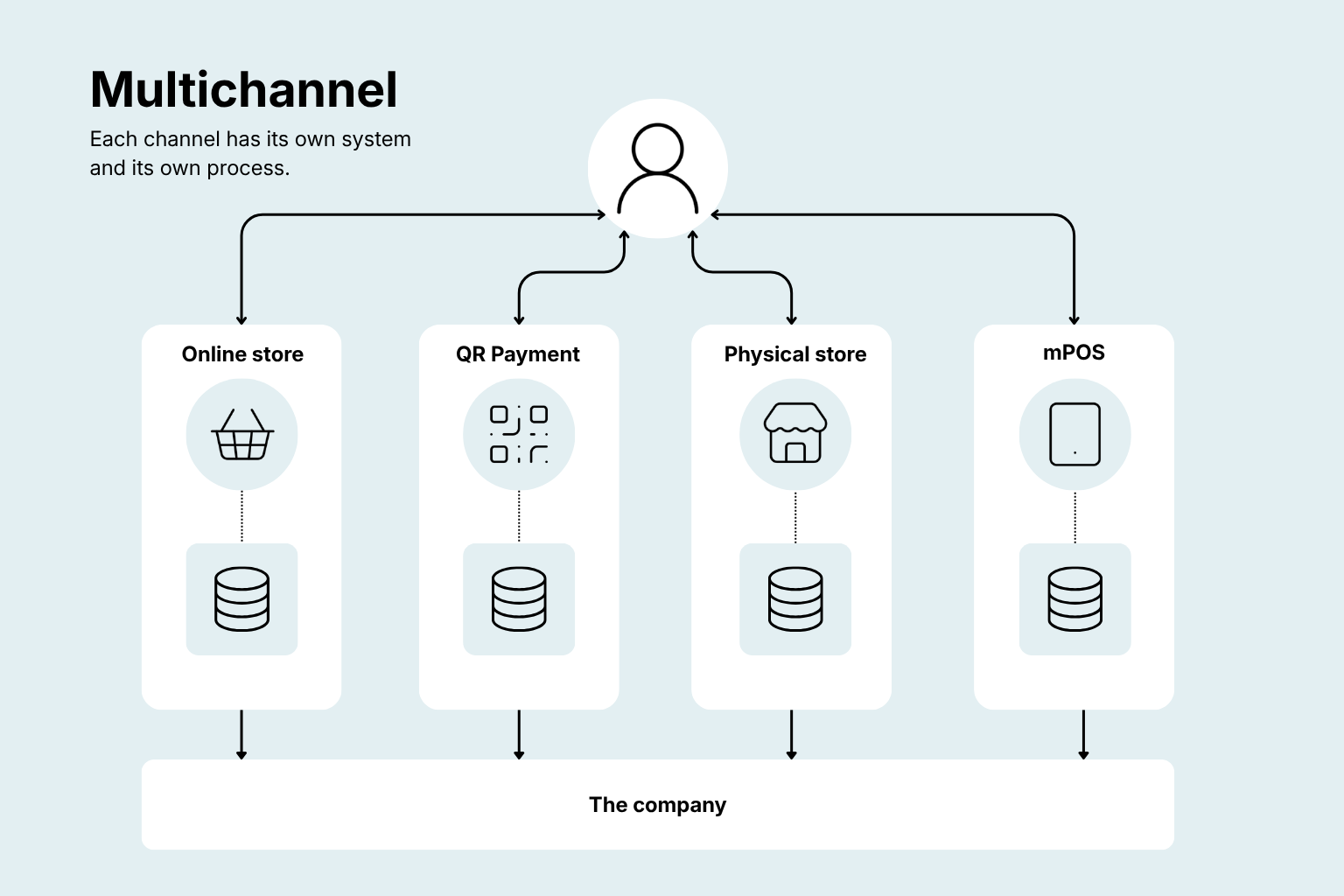
Multichannel simply means the customer can shop in more than one place. Webshop, store, a link in an email, a QR code on a sign. The customer chooses where.
There's often no grand strategy behind it either. A new channel was added because there was a need for it. Nothing wrong with that. More channels mean more ways to be found and more ways to buy.
What typically defines multichannel is that the channels operate fairly independently of each other. Each one can have its own system, its own overview and its own way of doing things. Opening a new channel often means building another separate setup alongside the ones you already have.
Step 2: Omnichannel, where the customer can move between channels
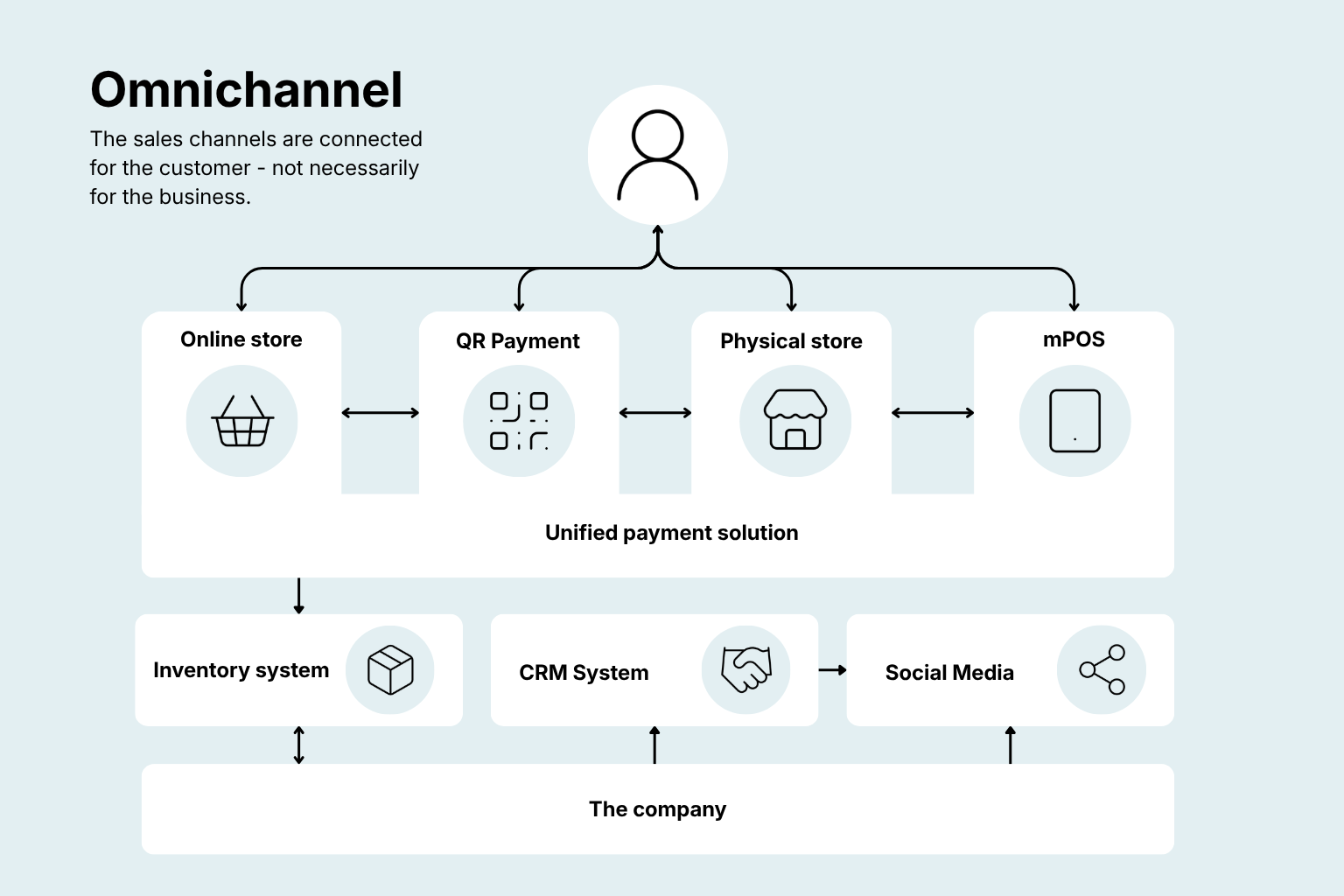
Omnichannel is when the channels start to connect for the customer. They can start in one place and finish in another.
Customers don't distinguish between your webshop and your physical store in the same way your systems might. If they've bought something in one place, they expect to be able to deal with it somewhere else: check stock on their phone, buy online, exchange it in-store, or have it sent home from the counter.
To the customer, it's one company. Omnichannel is about making the channels feel that way too. No customer goes around asking for omnichannel by name. They just expect things to work together.
But creating a connected experience for the customer doesn't necessarily mean your systems are connected behind the scenes.
A return made in-store might still have to be registered manually in the webshop's system. Payments from the store and the webshop can end up in different places, in different formats. And if a customer calls with a question about an order, the person answering may still have to search across several systems to piece together the full history.
The customer might not notice the difference. The business does.
Step 3: Unified commerce, where the systems connect too
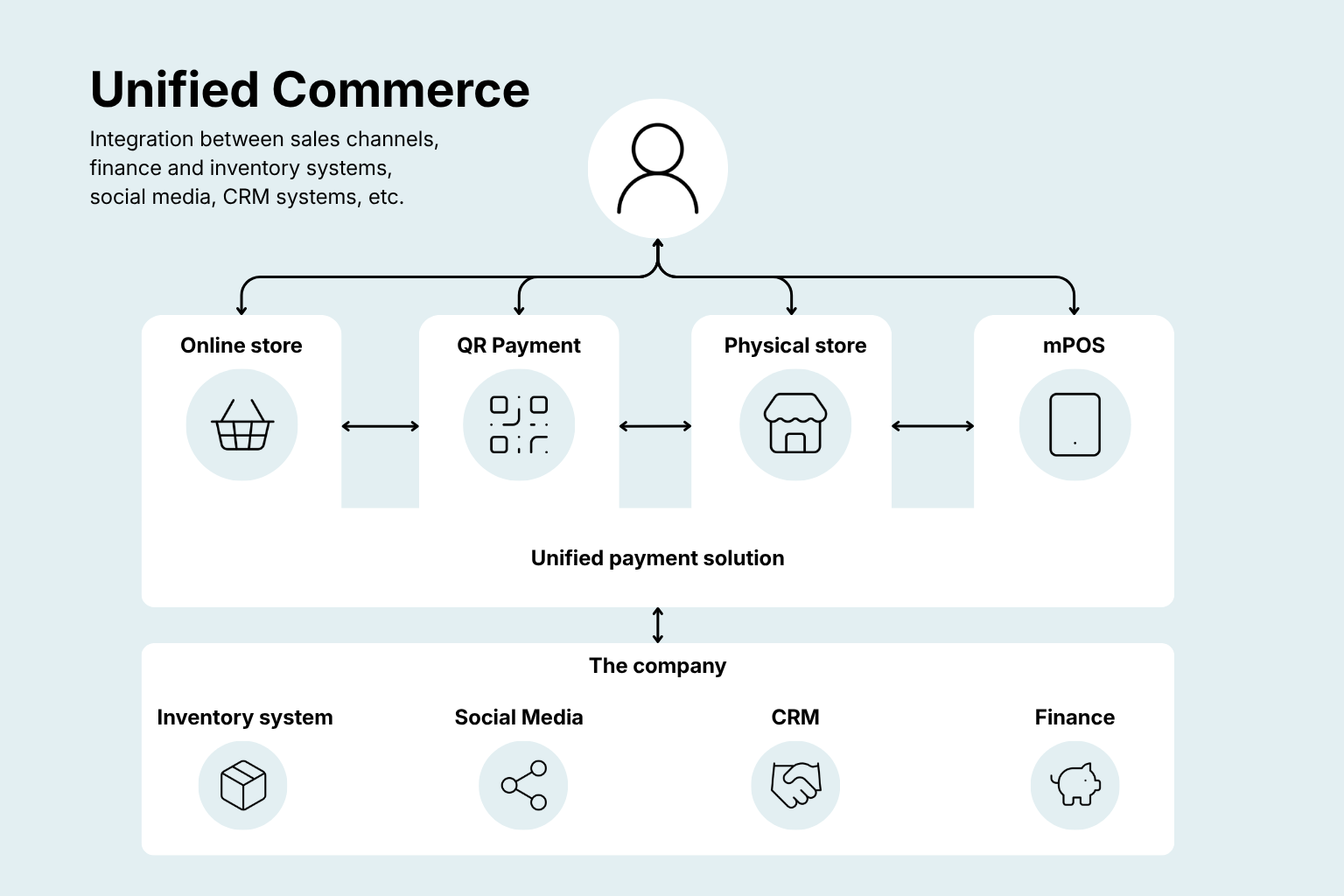
Unified commerce takes it one step further. Here, it isn't just the customer experience that's connected. The channels also run on the same platform and share the same data.
Orders, payments and information from different sales channels can be gathered and managed in one place. Where a purchase started matters less, because the same systems follow it all the way through.
That doesn't automatically make the customer experience better. But it makes it far easier to deliver a joined-up experience without creating extra manual work behind the scenes.
So what's the difference in practice?
There isn't necessarily one of the three levels that's right for every business. The real difference lies in how much complexity comes with each one as the number of sales channels grows.
Multichannel makes it easy to meet customers in more places, but every new channel can also become another separate system that needs to be managed and maintained.
Omnichannel connects the channels better for the customer. It creates a more coherent buying experience, but can still leave the business with manual processes and disconnected systems behind the scenes.
Unified commerce tries to remove those divides internally too. Data, systems and workflows are tied together, so a new sales channel increasingly becomes an extension of the existing setup rather than yet another separate solution.
In short: multichannel is about being present in more places. Omnichannel is about connecting those places for the customer. Unified commerce is about connecting them for the business too.
Four channels don't have to mean four payment systems
The good news is that you don't need to merge your entire business into a single system to start closing some of the gaps between your sales channels.
ePay brings the payment side together.
Products, stock, orders and customer data can stay exactly where they are, in your shop platform, ERP or CRM. But payments from your store, webshop, handheld terminals and QR payments can run through the same payment platform, so adding a new sales channel doesn't have to mean adding yet another separate payment system.
Every transaction lands in the same Backoffice, no matter where it started. Support, store staff and the office can all see the same payment in the same place. That might sound like a small thing, right up until a customer calls and nobody can remember where the payment was actually made.
Events can be pushed to your own systems via webhooks, so your systems receive the information the moment something happens instead of relying on someone to move it between systems manually.
Settlements can also be linked back to individual transactions using your own references. That makes it possible to reconcile against, for example, an invoice number or order ID, rather than having to piece the connection together afterwards.
Payments become a shared layer across your sales channels that the rest of your systems can build on.
When the next channel comes along
New sales channels rarely appear because someone wanted more systems to manage. They appear because customers are asking for new ways to shop.
So the real question isn't how many channels you have. What matters is what happens behind the scenes when the next one comes along.
Can it connect to your existing setup, or does it mean yet another login, yet another data format and yet another manual workflow?
The better your systems are already connected, the easier it becomes to add new ways of selling without making everyday life more complicated in the process.
See how your sales channels can come together with ePay